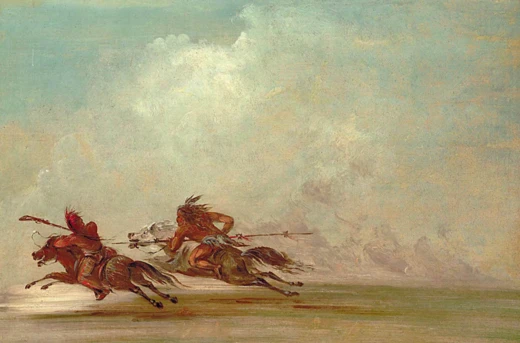
Knife
No flash, no bang, just a quiet edge in the chaos of the battlefield.

The Knife is a close-range melee weapon in the Tribes series of team-based shooters developed by Volition, Inc. Available in the original Tribes (2000) and Tribes 2 (2005), it occupies one of the multiple weapon slots a player can carry simultaneously, fitting the franchise's signature design where soldiers pack an arsenal rather than choosing a single loadout.
Its primary tactical value lies in silence: unlike every firearm in the series, the Knife produces no muzzle report, no shell casings, and no audible signature. In a genre defined by chaotic, loud team battles, a weapon that kills without announcing itself is a distinct strategic tool for flanking, finishing wounded opponents, or moving through contested ground without painting a target on your back.
- Type
- Melee / Close-range
- Developer
- Volition, Inc.
- First appears
- Tribes (2000)
- Also in
- Tribes 2 (2005)
- Noise signature
- Silent (no gunshot audio)
- Range
- Very short (melee reach)
- Weapon slot
- One of multiple simultaneously carried weapons
Lore & Background
In the world of Tribes, combat is loud, kinetic, and often absurdly over-armed. Soldiers sprint across rocky outcroppings and canyon floors with half a dozen weapons strapped to their bodies, and the default assumption is that every kill comes with a thunderous report echoing off the terrain. The Knife breaks that assumption. It is the one tool in an otherwise explosive arsenal that whispers instead of shouts.
Volition designed the Knife as a deliberate counterpoint to the series' gunplay. In a game where hearing a shot tells you exactly where an enemy is, a silent takedown removes that information entirely. A player who closes the distance and strikes with the Knife leaves no audio trail for the rest of the team to triangulate. In the tight corridors and narrow chokes of many Tribes maps, that silence is the difference between a clean flank and a four-man ambush.
The Knife also reflects the franchise's broader philosophy: no weapon is strictly superior, and the best player adapts to the moment. You might open a fight with a shotgun at mid-range, switch to a rifle to chip down a distant target, then close the gap and finish with the Knife before the enemy's team can react to the noise of your earlier shots. It is the last word in a sentence started by gunfire.
In Their Own Story
The canyon floor was a mess of spent casings and scorch marks. Kael had been taking fire from two angles for thirty seconds, health bar bleeding red. He rolled behind a boulder, swapped his rifle for the Knife, and waited. The enemy soldier on his left kept pushing, confident, his boots crunching on gravel. Kael counted three steps. Four. He came up over the rock, silent, and the blade found the gap in the armor before the man ever heard him coming. No flash. No bang. Just a soft thud and a body dropping into the dust. The second enemy, still spraying at the boulder, never knew why his teammate stopped moving. Kael was already gone, knife still in hand, sprinting for the ridge.
Reader's Guide
The Knife solves one specific problem in a Tribes match: it kills without making a sound. In a game where every gunshot is a beacon, the Knife lets you eliminate a target—especially a wounded one or a lone flanker—without telling the rest of the enemy team exactly where you are. Slot it into one of your weapon carry positions and keep it as your finishing tool or your ambush tool.
In practice, the Knife is extremely short-range. You have to be practically on top of your target, which means you are also in the range of every other weapon they are carrying. Its strength is information denial: no muzzle flash, no audio cue, no shell casing to mark your position. Its weakness is obvious—you are helpless at any distance beyond arm's length, and a single well-placed shot from a rifle or shotgun ends the encounter before the blade ever connects.
The Knife is not a primary weapon. It is the last resort and the first strike. Use it to finish a target you have already damaged so you don't alert nearby enemies with a final burst, or to open a close-quarters engagement in a tight corridor where the enemy hasn't yet turned their weapon toward you. In the multi-weapon system, it costs you one slot, so weigh that against whether you need a sixth gun for the map. In open, long-sightline arenas it is nearly useless; in cluttered, close-range maps it is a genuine edge.
Did You Know?
- Tribes' core design let players carry multiple weapons at once, meaning the Knife could be slotted alongside a shotgun, a rifle, and a grenade launcher simultaneously rather than replacing any of them.
- Because the Knife produces no audio, it was one of the few ways to eliminate an enemy without giving the opposing team a sound-based position cue in an otherwise extremely loud game.
- The Knife's role as a silent melee option stood in deliberate contrast to the series' identity as a loud, over-armed, run-and-gun team shooter, making it a tactical outlier in the loadout.
- In the original Tribes (2000), the multi-weapon carry system was a major differentiator from contemporary FPS titles, and the Knife was part of that broader arsenal philosophy from the franchise's start.
More in Weapons & Equipment
Elsewhere in the Tribes universe
Spotted an error? Know more?
This is a living reference — every entry is fact-audited, and reader corrections feed straight into our audit queue. Suggest an edit · See this site's audit record