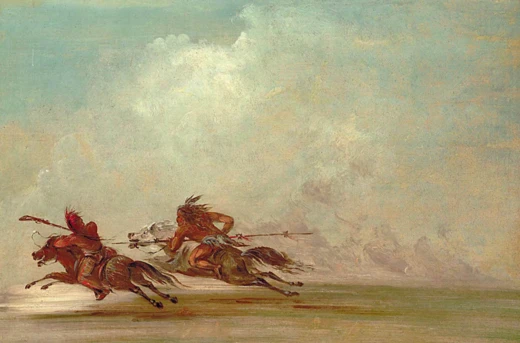
No Cover Terrain Running
No walls, no crates, no excuses—just open ground and four friends sharing one gun.

No Cover Terrain Running is the defining design philosophy of the Tribes franchise, a third-person team-based shooter series that deliberately strips away the walls, crates, and buildings players expect in conventional shooters. Instead of hiding behind artificial structures, players navigate open desert and rocky terrain where the only cover consists of natural features—dunes, scattered boulders, and low outcroppings. This forces a gameplay loop built on constant movement, aggressive positioning, and squad coordination rather than static defense.
The mechanic permeates every entry from the original Tribes (2000, Human Entertainment) through Tribes: Ascend (2012). Because the environment rarely offers a solid wall to duck behind, every engagement becomes a contest of footwork, line-of-sight management, and the unique tribe system in which small squads of four share a pool of weapons. The result is a shooter that feels less like a cover-based brawler and more like a fast, open-field tactical sport.
- Franchise
- Tribes
- Original developer
- Human Entertainment
- Genre
- Third-person team-based multiplayer shooter
- Squad size
- 4 players per tribe
- Cover philosophy
- No artificial structures; natural terrain only
- Setting
- Open desert and rocky biomes
- Signature system
- Shared weapon pool within a tribe
Lore & Background
The Tribes universe is a sun-baked, arid world where small nomadic warbands—called tribes—compete for territory across vast stretches of dune, scrub, and scattered stone. There are no cities, no fortifications, no bunkers. The landscape itself is the arena, and the only things that can break a line of sight are the undulations of the earth and the occasional cluster of rock. This is by design: the world was never built for hiding. It was built for running.
In this setting, a tribe's strength is not a single hero with a sniper rifle tucked behind a sandbag. It is four runners who can swap a rocket launcher for a shotgun in a heartbeat, who can cross a dune ridge in a sprint while a teammate lays down suppressive fire from the other side. The open ground means every shot is a trade; every reposition is a statement. The terrain does not forgive a player who stands still, and the enemy is never more than a few seconds of sprint away.
The philosophy carries through the franchise: whether it is the original's stark desert, the varied biomes of Tribes 2, or the more structured maps of Ascend, the core tenet remains. You will not find a wall to hug. You will find a dune to crest, a rock to pivot around, and a teammate who can hand you the next weapon before the dust settles.
In Their Own Story
The wind off the salt flats carried the crunch of boots on gravel. Kael crouched behind a boulder no taller than her hip, watching the enemy tribe crest the next dune. There was no building to flank, no doorway to peek through—just the long, unbroken sightline of the open plain. She tapped the comms: "Swap. I need the scatter."
A second later the shotgun materialized in her hands, and the rocket launcher she'd been carrying was already in her teammate's grip two dunes back. The enemy spotted her. She was already moving, sprinting left, the dune's shoulder breaking her silhouette for exactly the half-second she needed. The shotgun roared. The open ground swallowed the sound. And then she was gone, already running toward the next rock, the next crest, the next breath of cover the world would give her.
Reader's Guide
At its core, No Cover Terrain Running means you will never find a wall, a crate, or a building to hide behind. The only cover in a Tribes map is the terrain itself: dunes, boulders, low rock formations, and the occasional tree or ruin fragment. This single rule reshapes everything.
Because you cannot plant behind a structure, movement is constant. You are always sprinting, pivoting around a rock, or cresting a dune to break line of sight. A player who stops is a target. The open sightlines mean enemies can see you from very far away, so your job is to stay in motion and use the small natural features as momentary shields rather than permanent positions.
The tribe system is your real cover. Four players share a pool of weapons, so you can swap a long-range rifle for a close-range shotgun in an instant without dropping to the ground. This lets your squad reposition as a unit: one member draws fire on a dune ridge while the others flank through a gap between rocks. The shared weapon pool means you never lose momentum to a reload-and-swap cycle.
From the original Tribes through Tribes 2, Vengeance, and Ascend, the no-cover philosophy has remained the franchise's backbone. Later entries added more varied biomes and slightly more structured map layouts, but the open-terrain, movement-first design never left. For a new player, the key takeaway is simple: your feet are your armor, your squad is your wall, and the desert never gives you a place to stand still.
Did You Know?
- The no-cover design was a deliberate departure from contemporaries like Quake and Unreal, which relied heavily on indoor arenas and destructible walls.
- The tribe weapon-sharing system means a single squad of four can cycle through an entire loadout without any player ever dropping a weapon to the ground.
- Tribes was developed by Human Entertainment, a studio that had previously worked on the X-Com series, giving the franchise a strong tactical and squad-based DNA.
- The open-terrain design means that even in later entries like Tribes: Ascend, maps are designed around natural sightlines and dune geometry rather than enclosed corridors.
More in Gameplay & Mechanics
Elsewhere in the Tribes universe
Spotted an error? Know more?
This is a living reference — every entry is fact-audited, and reader corrections feed straight into our audit queue. Suggest an edit · See this site's audit record